Cultural Heritage Management Plan
When is a Cultural Heritage Management Plan required?
A Cultural Heritage Management Plan (CHMP) delivers a comprehensive assessment of cultural heritage values in the project area and outlines how to manage or protect these values during development. It provides clear recommendations to ensure compliance with legal requirements and respectful treatment of Aboriginal heritage.
A CHMP is mandatory when:
- The proposed activity is a high impact activity, as defined in the Aboriginal Heritage Regulations 2018 (e.g. subdivisions, infrastructure works, industrial developments); and
- The activity is located in an area of cultural heritage sensitivity — as defined under the regulations.
These two criteria must be met together for a CHMP to be legally required. However, a voluntary CHMP can also be prepared where there is a desire to engage Traditional Owners early and reduce future risk or uncertainty.
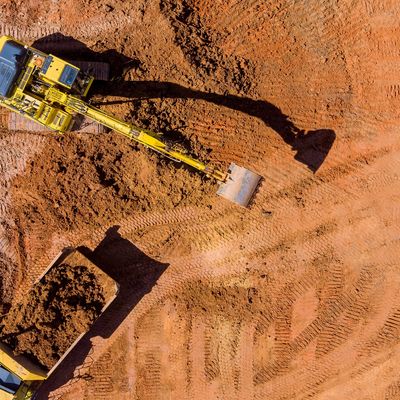

Why is a Cultural Heritage Management Plan important for your project?
Planning permits, work authority applications, and other statutory approvals cannot be issued until the CHMP is approved—making early assessment critical to project timelines.
Failure to complete a required CHMP can result in:
- Planning permit refusal or delays
- Stop-work orders
- Financial penalties
- Legal proceedings for unauthorised harm to Aboriginal cultural heritage
How can Strata Heritage assist?
CHMPs must be prepared in accordance with the Aboriginal Heritage Regulations 2018, and:
- Be authored by a heritage advisor;
- Involve the Registered Aboriginal Party/ Traditional Owner groups;
- Be approved by the RAP or First Peoples – State Relations, depending on RAP presence
With six recognised types of CHMPs in Victoria differentiated by their level of complexity and fieldwork requirements, Strata Heritage can provide strategic guidance to design and deliver a CHMP which meets the scale and risk profile of your project.
Strata Heritage can deliver:
- Initial screening to confirm if a CHMP is required
- Desktop research on existing cultural heritage records and data
- Consultation with Registered Aboriginal Parties (RAPs) and Traditional Owners
- Field assessments including site inspections and, if needed, subsurface testing
- Documentation of findings including cultural heritage values and potential impacts
- Development of management strategies to avoid, minimize, or mitigate harm
- Preparation of the CHMP report with recommendations and compliance measures
- Submission to and approval by the relevant Aboriginal authority or government body
- Implementation and monitoring of the management strategies during the development process
Quotation
Contact us today to discuss your project scope and receive a quotation that will meet your CHMP requirements.
Do I Need a CHMP? Cost, Timeline and Process Explained
A plain-English guide navigating the Cultural Heritage Management Plan process in Victoria.
If you've just received a request from your local council — or your planning consultant — asking for a Cultural Heritage Management Plan before your project can proceed, you're probably asking three questions: Do I actually need one? How much will it cost? And how long is this going to take?
The Strata Heritage CHMP Guide answers all three, using the correct regulatory language so you know exactly where you stand under the Aboriginal Heritage Act 2006 (Vic) and the Aboriginal Heritage Regulations 2018.
What Is a Cultural Heritage Management Plan (CHMP)?
A Cultural Heritage Management Plan — commonly called a CHMP — is a formal written report that assesses the potential impact of a proposed development or land use activity on Aboriginal cultural heritage within a defined activity area. It outlines the measures that must be taken before, during and after the activity to manage, protect, and, where unavoidable, mitigate harm to that heritage.
CHMPs are prepared by a Heritage Advisor — a person who is appropriately qualified in a discipline directly relevant to Aboriginal cultural heritage management, such as archaeology, anthropology or cultural heritage studies, as recognised under section 189(1) of the Aboriginal Heritage Act 2006.
Once prepared, a CHMP must be submitted to and approved by the relevant Registered Aboriginal Party (RAP) — the Traditional Owner group with responsibility for the project area — or, where no RAP has been appointed, by the Secretary of the Department of Premier and Cabinet through First Peoples – State Relations (formerly Aboriginal Affairs Victoria).
Planning permits, work authority applications, licences and other statutory approvals cannot be issued until a mandatory CHMP has been approved. This makes early engagement with a Heritage Advisor critical to keeping your project on schedule.
Do I Need a CHMP? Understanding the Legal Triggers
The most common question planners, land managers, and property developers ask — and the one that causes the most confusion — is whether a CHMP is legally required for their project.
Under the Aboriginal Heritage Act 2006, the most common* triggers for a CHMP are those considered mandatory by regulation 7 of the Aboriginal Heritage Regulations 2018 when two criteria are met simultaneously:
*There are five other triggers for CHMPs in the Aboriginal Heritage Act 2006!
Criteria 1. The proposed activity is a "high impact activity"
High-impact activities are defined in Part 2, Division 5 of the Aboriginal Heritage Regulations 2018 and include activities that involve significant ground disturbance. Common examples include:
- Residential or commercial subdivision of land
- Construction of buildings or structures requiring excavation
- Installation of underground utilities and infrastructure
- Road construction and major earthworks
- Extraction of mineral, stone, sand or gravel resources
- Renewable energy infrastructure including wind and solar farms
- Major vegetation clearing on identified landforms
Criteria 2. The activity area is within an "area of cultural heritage sensitivity"
Areas of Cultural Heritage Sensitivity are specified in Part 2, Division 3 of the Aboriginal Heritage Regulations 2018 and include:
- Land within 200 metres of a waterway, wetland, lake or estuary
- Land on or within 50 metres of a registered Aboriginal cultural heritage place on the Victorian Aboriginal Heritage Register (VAHR)
- Coastal land and coastal dunes
- Land contains cave, lunettes, or wetlands.
- Volcanic landscapes, lava flows and stony rises
- Land subject to specific heritage sensitivity mapping under Schedule 1 of the Regulations
Both criteria must be satisfied together. A high impact activity on non-sensitive land does not trigger a mandatory CHMP. Likewise, minor works in a sensitive area may not trigger a CHMP if they do not meet the definition of a high impact activity.
How to Check Whether Your Land Is in a Sensitive Area
VicPlan's Mapping Tool include the 'areas of cultural heritage sensitivity' as a spatial layer visible for free. You can also search the Aboriginal Cultural Heritage Register and Information System (ACHRIS), which is the Victorian Government's register of all known Aboriginal cultural heritage places and objects. The First Peoples – State Relations website provides the Aboriginal Heritage Regulations Planning Tool — a tool that allows proponents to assess if a CHMP is required by answering a series of questions about high impact activties and area of cultural heritage sensitivity. If you are unsure whether your project triggers a mandatory CHMP, a qualified Heritage Advisor can provide a preliminary due diligence assessment (sometimes called a cultural heritage due diligence report) to clarify your obligations before you commit to the full CHMP process.
Can I Prepare a CHMP Voluntarily?
Yes. Under the Aboriginal Heritage Act 2006, a CHMP can be prepared voluntarily — even where one is not legally required — where a proponent wishes to engage Traditional Owners early, reduce heritage risk, or gain certainty before committing to land purchase or detailed project planning.
A voluntary CHMP can also be a strategically useful tool in complex projects where heritage values are unknown and early identification of constraints can avoid costly redesigns later in the approvals process.
What About Exemptions?
Not all activities in sensitive areas trigger a mandatory CHMP. Part 2, Division 2 of the Aboriginal Heritage Regulations 2018 sets out a list of exempt activities and operations — these are typically activities of limited ground disturbance impact or activities already covered by existing approvals. A Heritage Advisor can advise whether a relevant exemption applies to your project.
A Preliminary Aboriginal Heritage Test (PAHT) is another mechanism available under the Act. A PAHT allows a proponent to voluntarily seek certification from the Secretary (through First Peoples – State Relations) that there is no requirement for a CHMP. If the PAHT is approved, the obligation to prepare a CHMP is removed.
What Happens If I Don't Prepare a Required CHMP?
Failing to prepare a required CHMP when one is legally triggered is an offence under the Aboriginal Heritage Act 2006 and can attract substantial penalties. More practically, your planning permit, work authority or licence simply will not be issued. If works commence without an approved CHMP in place, enforcement action — including stop-work orders — can be taken. The risk to project timelines and costs of non-compliance far outweighs the cost of early engagement.
How Much Does a CHMP Cost?
Cost is the question every developer wants answered upfront — and it's the one that Heritage Advisors are most cautious about answering without first understanding the details of a project. The honest answer is: it depends, and the range is wide.
The Cost Range
CHMP costs in Victoria can range from approximately $10,000 to $500,000 or more, depending on the size of the activity area, the type and level of assessment required, the nature of any Aboriginal cultural heritage identified, and the requirements of the relevant Registered Aboriginal Party.
To give a sense of scale:
- A due diligence assessment (to determine whether a CHMP is required) typically costs in the range of $3,000–$8,000 depending on site size and complexity.
- A desktop-only CHMP (where fieldwork is not required) may cost $8,000–$20,000.
- A standard assessment CHMP involving field survey may typically costs $15,000–$60,000 for a small to medium development site.
- A complex assessment CHMP involving archaeological excavation can cost $50,000–$500,000 or more, with larger infrastructure or resource extraction projects sometimes exceeding this.
What Drives the Cost?
There are two main cost components in any CHMP:
Heritage Advisor fees cover the time spent on desktop research, fieldwork, RAP consultation, report preparation and project management. These are negotiated directly between the proponent (called the Sponsor under the Act) and the Heritage Advisor. A sponsor is required to appoint a Hertiage Advisor to assist them prepare the CHMP (s.58) and typically acts on behalf of the sponsor in all aspects of CHMP development. The Australian Association of Consulting Archaeologists Inc. (AACAI) recommends minimum daily consulting rates for 2025 (ex-GST) ranging from $80–110 for Trainees to $200–250 per hour for Principal Archaeologists.
Registered Aboriginal Party (RAP) fees are charged by the RAP for their participation in the CHMP process — including responding to the Notice of Intent to Prepare a CHMP (NOI), evaluating the CHMP for approval, attending consultation meetings, conducting cultural inductions and participating in fieldwork. These fees are set by each RAP and vary across the state.
The most significant cost variable is whether a complex assessment is required. Complex assessments involve subsurface archaeological excavation — including manual test pits (TPs), shovel test pits (STPs) and, increasingly, machine-excavated trenches — across all or part of the activity area. Several RAPs have introduced updated complex assessment guidelines that increase the density of required testing across activity areas, which can substantially increase fieldwork costs and timelines.
Getting a Quote
When seeking a quote from a Heritage Advisor, be prepared to provide:
- The property address and lot size (the "activity area", cadastral information)
- The nature of the proposed works (what is being built or excavated)
- Any known heritage information for the site
- Your project timeline and permit deadlines
It is strongly recommended to obtain at least two or three quotes, as costs can vary between consultancies. Be cautious of quotes that appear significantly lower than others — this may indicate that the Heritage Advisor has not adequately accounted for RAP requirements, particularly for complex assessment phases.
There are also statutory government fees payable which is a separate cost set by the regulations and is payable to the relevant approval authority (the RAP or First Peoples – State Relations).
How Long Does a CHMP Take?
Timeline is often the most pressing concern for developers with planning permit deadlines or construction programs locked in. The honest answer, again, is that it depends on the level of assessment required — but there are statutory timeframes that provide some certainty at each stage.
The CHMP Process Step by Step
Understanding the timeline requires understanding the process. A CHMP moves through the following stages:
Stage 1 — Notice of Intent (NOI): Before any CHMP assessment can begin, the Sponsor must submit a Notice of Intent to Prepare a CHMP to First Peoples – State Relations through the ACHRIS system, along with payment of the prescribed NOI fee. The NOI must also be provided to each relevant RAP, any owners or occupiers of land within the activity area, and any relevant municipal council. RAPs have 14 days from receipt of the NOI to advise whether they intend to evaluate the CHMP. If a RAP does not respond within 14 days, or elects not to evaluate the CHMP, the Secretary becomes the decision-maker.
Stage 2 — Desktop Assessment: All CHMPs must include a desktop assessment. This involves a review of background information including the Victorian Aboriginal Heritage Register, historical maps and aerial imagery, environmental databases, geological and geomorphological data, and any previous archaeological reports for the area. The desktop assessment forms the foundation for determining whether fieldwork is required and, if so, what level of assessment is appropriate.
Stage 3 — Standard Assessment (if required): If the desktop assessment determines that it is reasonably possible that Aboriginal cultural heritage is present in the activity area, a standard assessment is required. This involves a pedestrian ground survey of the entire activity area to identify surface Aboriginal cultural heritage material and assess landforms for archaeological potential.
Stage 4 — Complex Assessment (if required): If the standard assessment identifies Aboriginal places, or determines that Aboriginal cultural deposits are likely to be present in a subsurface context, the CHMP progresses to a complex assessment. This involves the excavation of manual test pits and, on occasion, machine-excavated trenches across the activity area to test for the presence, spatial extent and significance of subsurface cultural heritage deposits.
Stage 5 — Report Preparation and RAP ReviewOnce all required assessment stages are complete, the Heritage Advisor prepares the CHMP report, detailing the results of all assessments, identifying any Aboriginal places registered on the VAHR as a result of the process, assessing the impact of the proposed activity on those places, and setting out management conditions to be observed before, during and after the activity. The RAP and/or First Peoples – State Relations may review a draft CHMP before formal submission.
Stage 6 — Submission and Evaluation: The Sponsor submits the completed CHMP to the relevant approval authority along with the prescribed statutory submission fee. The approval authority then has a statutory 30 days to evaluate the CHMP and decide to approve or refuse to approve it. This countdown pauses if additional information is requested and resumes when all information has been received.
Realistic Timeframes
In practice, the total time from engaging a Heritage Advisor to receiving an approved CHMP varies considerably:
- Desktop-only CHMPs: Approximately 6–12 weeks from NOI submission to approval, depending on RAP engagement timelines.
- Standard assessment CHMPs: Approximately 3–6 months from engagement to approval.
- Complex assessment CHMPs: Typically 6–18 months, and sometimes longer where significant heritage is identified, salvage excavation is required, or RAP consultation is protracted.
The statutory 30-day evaluation period is often the most predictable part of the process. The assessment and report preparation phases are where timelines can blow out — particularly when unexpected heritage discoveries are made, additional testing is required, or RAP scheduling constraints affect fieldwork dates.
⚠️ The Most Important Takeaway on Timing: Start Early
The single biggest mistake developers make is treating a CHMP as a late-stage approvals formality.
It is not — and the consequences of discovering that too late can be severe.
By the time many developers engage a Heritage Advisor, they have already committed to a settlement date, signed a construction contract, pre-sold lots, or locked in a planning permit timeline. At that point, if a complex assessment is triggered and significant Aboriginal cultural heritage is identified, the project is already in trouble.
Stop-work directions under the Aboriginal Heritage Act 2006, mandatory heritage place registrations on the Victorian Aboriginal Heritage Register that can take more than six weeks to process, and protracted negotiations with a Registered Aboriginal Party over management conditions or salvage requirements can halt a programme for months — sometimes longer.
The developers who navigate the CHMP process most successfully are those who treat heritage as a design input rather than a compliance hurdle. When engaged at the feasibility or pre-purchase stage — before the activity area is fixed, before the lot layout is set, and before settlement has occurred — a Heritage Advisor can genuinely shape project outcomes for the better.
Early engagement creates real development value in ways that may not be obvious:
Yield and layout optimisation. If a cultural heritage assessment identifies Aboriginal places or deposits within the activity area, management conditions may require avoidance — meaning certain areas cannot be disturbed. Developers who know this before fixing a lot layout can design around sensitive areas, often incorporating them as open space, drainage reserves or landscape features. Developers who discover this after the lot layout is approved face costly replanning, potential yield loss, and amended planning permits.
Informed land acquisition. Completing a due diligence assessment or a preliminary desktop review before settlement gives a purchaser a clear picture of the likely CHMP obligations, costs and timelines attached to a site. Cultural heritage sensitivity is not reflected in land price — a site in a highly sensitive area may carry CHMP costs of $200,000 or more that are invisible until the process begins. Pre-purchase heritage advice is one of the cheapest risk mitigation tools available to a developer.
Offset placement and management area design. Where harm to Aboriginal cultural heritage cannot be avoided, management conditions may include the dedication a protected area within the development footprint where identified heritage is preserved in situ. Early engagement allows these areas to be planned as genuine amenity assets: bushland reserves, interpretive walking trails, or publicly accessible heritage spaces that add marketable character to a development rather than appearing as an afterthought.
RAP relationship management. Registered Aboriginal Parties are not obstacles — they are statutory partners in the CHMP process with a genuine interest in good outcomes. Developers who engage early, communicate openly, and allow adequate time for RAP consultation consistently report smoother assessments, more workable management conditions, and less adversarial evaluation processes. Proponents who arrive at the RAP's door with a programme already locked in, under time pressure and seeking fast-tracked approval, tend to have a different experience.
Heritage as a marketing asset. In an increasingly competitive residential market, demonstrated responsiveness to Aboriginal cultural heritage can be a genuine point of difference. Developments that incorporate heritage storytelling — interpretive signage, place naming in collaboration with Traditional Owners, publicly shared heritage reports — have seen genuine buyer interest and media coverage.
This is not greenwashing; it requires authentic engagement from the start of the process. But it is only possible when heritage is treated as part of the project story, not as a compliance cost to be minimised.
If your project is likely to trigger a CHMP — or if you're simply not sure — engage a Heritage Advisor before you commit to a programme, a settlement date or a construction start. A preliminary discussion costs nothing and can save months.
Summary: CHMP Quick Reference
When is a CHMP required?
When the proposed activity is a "high impact activity" AND the land is in an area of "cultural heritage sensitivity" under the Aboriginal Heritage Regulations 2018
What law governs CHMPs? Aboriginal Heritage Act 2006 (Vic) and Aboriginal Heritage Regulations 2018
Who prepares a CHMP? A Heritage Advisor
Who approves a CHMP? The relevant Registered Aboriginal Party (RAP), or First Peoples – State Relations if no RAP is appointed
How much does a CHMP cost?$5,000–$500,000+, depending on site size, assessment level and RAP requirements.
How long does a CHMP take? 6 weeks to 18+ months, depending on assessment complexity
What is the evaluation period? 30 days statutory (once a complete CHMP is submitted)
Can I avoid a CHMP? Possibly — via a PAHT, an exemption, or a due diligence assessment that confirms no trigger.
Strata Heritage is a Victorian Heritage Consultancy with expertise in the full range of CHMP assessment types — from desktop-only assessments through to complex archaeological programs.
We work with developers, planners, councils, utility providers and infrastructure proponents across Victoria to deliver practical, compliant and timely heritage assessments.
If you're not sure whether your project triggers a CHMP, or you need a quote for a CHMP already in progress, contact us for a free preliminary discussion. Early advice costs nothing and can save your project months.
Related Terms and Legislation
Aboriginal Heritage Act 2006 (Vic) · Aboriginal Heritage Regulations 2018 · Cultural Heritage Management Plan (CHMP) · Heritage Advisor · Registered Aboriginal Party (RAP) · Cultural Heritage Sensitivity · High Impact Activity · Activity Area · Sponsor · Notice of Intent (NOI) · Desktop Assessment · Standard Assessment · Complex Assessment · Preliminary Aboriginal Heritage Test (PAHT) · Due Diligence Assessment · Victorian Aboriginal Heritage Register (VAHR) · Aboriginal Cultural Heritage Register and Information System (ACHRIS) · First Peoples – State Relations · Aboriginal Affairs Victoria · Cultural Heritage Permit (CHP) · Cultural Heritage Induction · Significant Ground Disturbance · Test Pit (TP) · Shovel Test Pit (STP) · Aboriginal Place · Salvage Excavation · Impact Assessment · Management Conditions · Evaluation Period
This information is provided for general information purposes only. It does not constitute legal advice. Victora's Heritage requirements are site-specific and project-specific — always seek advice from a Heritage Advisor for your particular circumstances.
Strata Heritage would like to acknowledge the Gunaikurnai People as the Traditional Owners of the land on which Strata Heritage is based.
We pay respect to Elders past, present, and future and recognise their continuing connection to the land, water, air and sky, acknowledging that sovereignty was never ceded.
Advice and Due Diligence Cultural Heritage Management Plans Cultural Heritage Permits Cultural Values Assessments Historical Heritage Services Heritage Industry Services
Email: enquiries@strataheritage.com.au
Phone: 0429 339 923
Copyright © 2025 Strata Heritage - All Rights Reserved.